

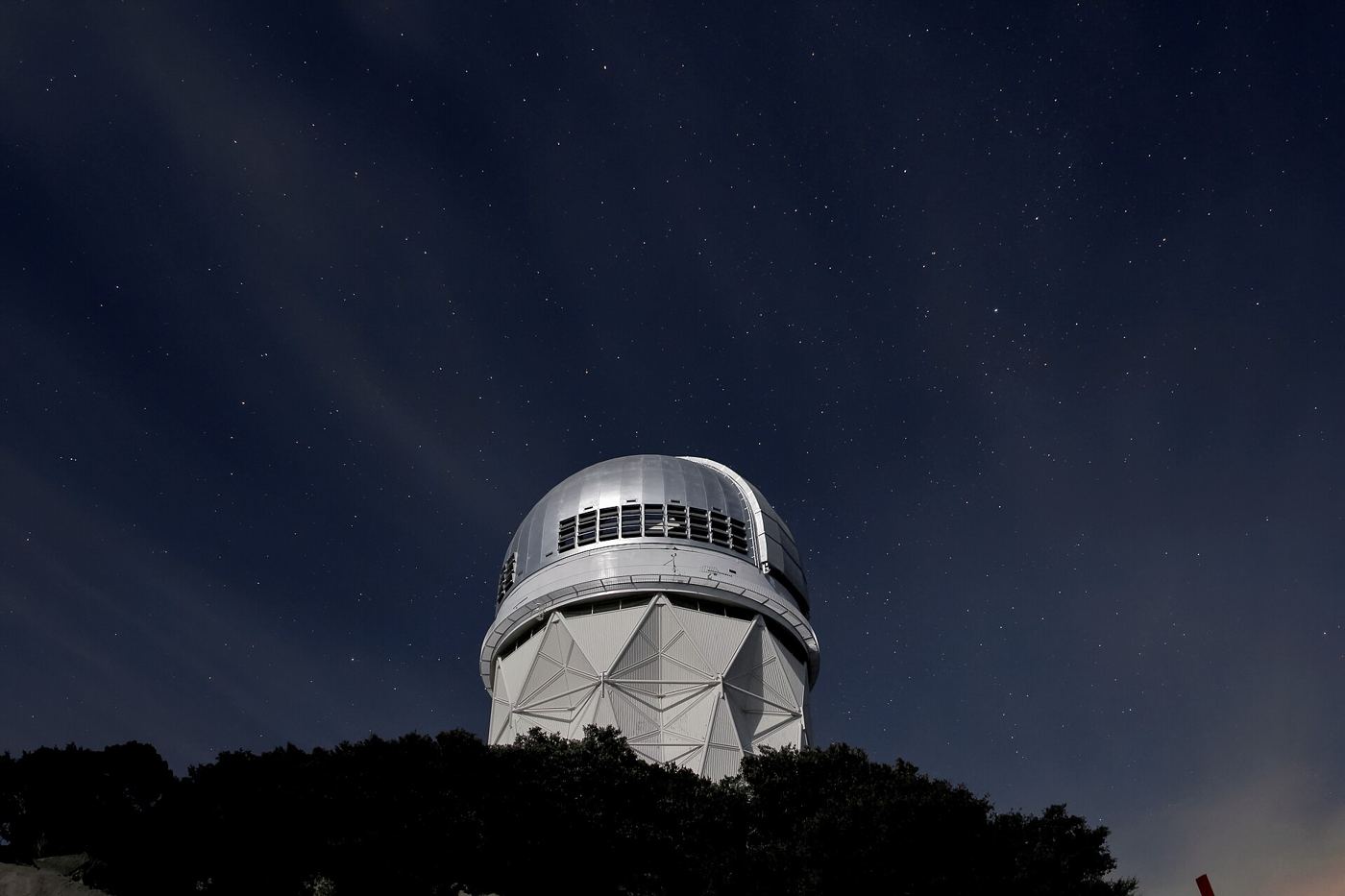
A single telescope, however powerful, can only watch the sky for part of the night, from one location, through one patch of weather. Astronomers are therefore linking mountain observatories across different continents into coordinated networks that hand over the same targets as the Earth rotates, building near-continuous records of changing objects that no one site could capture alone. The approach is proving especially valuable for variable stars, exploding stars and distant objects that brighten and fade on timescales of hours, where a gap caused by dawn or cloud can mean missing the most revealing moment. Shared scheduling software assigns each observatory the observations it is best placed to make, taking account of weather, equipment and the position of the target, while common data formats mean results from Chile, the Canary Islands and Australia can be combined the same morning. Smaller observatories, including university facilities once at risk of closure, gain a new scientific role as essential nodes in a global instrument larger than any of its parts.
What the Evidence Shows
Operating as a network demands trust and standardisation. Teams calibrate their instruments against shared reference stars so measurements from different telescopes can be compared directly, and they agree protocols for announcing urgent targets when something unexpected appears. In return, participants receive access to combined datasets far richer than their own observing time could produce, and early-career astronomers learn collaboration across time zones as a normal part of the job. The networks are also opening time for public and school programmes, since robotic telescopes can queue educational observations between research targets. Funding bodies increasingly favour these cooperative models because they extract more science from existing facilities instead of requiring entirely new construction. As survey telescopes begin discovering far more transient events each night than any team can follow up alone, coordinated networks look set to become the backbone of time-domain astronomy, ensuring that when the sky does something sudden and rare, someone, somewhere, is already watching it. Reporting and analysis from sources such as National Science Foundation track the same developments, and specialists following the coordinated telescope network say the direction is now consistent across independent lines of evidence.
The Wider Context
The wider context is a research landscape in which replication and open data now decide reputations. Findings connected to the coordinated telescope network are being checked by independent groups with shared datasets, and the teams involved publish their methods in full so rivals can test every step. That discipline is slower than a headline cycle, but it is why results in this area increasingly survive first contact with scrutiny.
What Happens Next
What happens next in the story of the coordinated telescope network will be decided by follow-up work already under way: larger samples, longer observation and instruments that have not yet come online. The researchers involved are unusually united on one point, that the current results justify the next investment of time and money. Readers will not have to wait long for the first tests of that claim. You can follow related developments in our coverage of science.
There is a practical lesson in all of this for readers deciding what to do today. Start with the verified facts, be wary of anyone promising certainty, and prefer reversible steps while the evidence is still developing. Circumstances differ by country, income and personal situation, so general guidance should always be weighed against your own context before you act on it in any significant or lasting way.
